

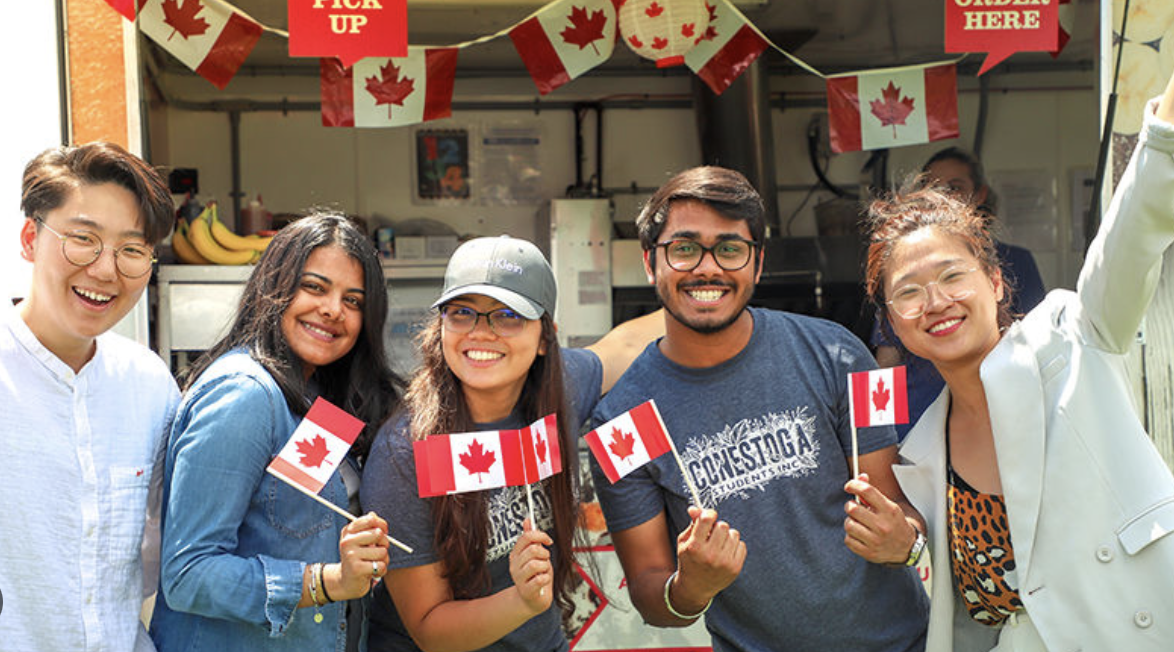
Canada remains a popular destination for international students who want to pursue university degrees, college diplomas, technical training and other post-secondary programs. However, being accepted by a Canadian school is only one part of the process.
For most international students, a Canada study permit is required before beginning a longer-term program at a Canadian designated learning institution. Applicants need to meet immigration requirements related to admission, financial support, documentation, provincial or territorial requirements and their intention to study in Canada.
In 2026, students also need to understand changes to the international student system, including the PAL/TAL framework, financial requirements, study permit application process and post-graduation work permit rules.
This complete guide explains the major Canada study permit requirements and steps you should understand before applying.
APPLY TO STUDY IN CANADA TODAY
What Is a Canada Study Permit?
A study permit is an immigration document issued by the Canadian government that allows eligible foreign nationals to study at a designated learning institution (DLI) in Canada.
Most foreign nationals who want to study in Canada for longer-term programs need a study permit. The permit is different from a visitor visa or electronic travel authorization (eTA).
If your study permit application is approved, you may also receive the appropriate travel document depending on your nationality and circumstances.
A study permit normally contains conditions related to your studies, work authorization and other immigration requirements.
Who Needs a Study Permit in Canada?
Most international students who plan to study in Canada for more than six months need a study permit.
However, there are exceptions. For example, some foreign nationals may study without a permit if their program lasts 6 months or less and meets the applicable conditions.
There are also specific situations where people may be allowed to study without a study permit, so applicants should check the current IRCC rules for their individual circumstances.
If you are planning to complete a longer academic program, obtaining the appropriate study permit before travelling to Canada is generally an essential part of your preparation.
What Is a Designated Learning Institution?
A Designated Learning Institution (DLI) is a Canadian school approved by a provincial or territorial government to host international students.
You generally need a Letter of Acceptance from a DLI to apply for a study permit.
The Canadian government maintains a list of designated institutions that allows prospective students to verify schools and identify institutions offering programs that may be eligible for a Post-Graduation Work Permit (PGWP).
Students should not assume that every program at every DLI is automatically eligible for a PGWP.
Before applying, check:
- The school’s DLI status
- The specific program
- Admission requirements
- Tuition fees
- Program duration
- Location
- PGWP eligibility, where applicable
- Current study permit requirements
Canada Study Permit Requirements in 2026
To qualify for a study permit, applicants generally need to demonstrate that they meet several requirements.
According to IRCC, you generally need to:
- Be enrolled at a designated learning institution
- Have sufficient money to pay your tuition
- Have sufficient money for living expenses
- Have enough money for return transportation
- Obey Canadian laws
- Provide a police certificate if required
- Complete a medical examination if required
- Convince an immigration officer that you will leave Canada when your authorized stay ends
Additional documents may be required depending on your nationality, location, family situation, program and individual circumstances.
Letter of Acceptance for a Canada Study Permit
One of the most important documents in a study permit application is your Letter of Acceptance (LOA).
You normally need to apply to a Canadian institution and receive an acceptance letter before submitting your study permit application.
Your LOA should correspond with the school and program you intend to attend.
Students should carefully review the information on their acceptance letter, including:
- Name of the institution
- Program name
- Program start date
- Program duration
- Tuition information
- Conditions of admission, if applicable
You should also make sure that the institution is currently listed as a DLI before proceeding with your application.
What Is a PAL or TAL?
A Provincial Attestation Letter (PAL) or Territorial Attestation Letter (TAL) is a document used in Canada’s international student system to confirm that a student has a place within the applicable provincial or territorial allocation.
For many study permit applicants, a PAL or TAL is required.
The letter is generally obtained through the designated learning institution after the student has been accepted.
However, there are important exemptions in 2026.
PAL/TAL Exemptions in 2026
Starting January 1, 2026, students entering eligible master’s or doctoral degree programs at public designated learning institutions do not need a PAL or TAL when applying for a study permit.
Other exemptions can apply to certain groups, including primary and secondary school students and some other specified categories.
Students planning to study in Quebec should also check Quebec’s separate requirements.
The PAL/TAL rules can be complicated, so applicants should verify their individual situation before submitting an application.
Quebec Study Permit Requirements
Students planning to study in Quebec should understand that the province has its own immigration and education requirements.
Depending on your situation, you may need a Quebec Acceptance Certificate (CAQ) in addition to the documents required for the federal study permit application.
The federal study permit process and Quebec’s provincial requirements should therefore be considered separately.
Always check the current requirements for your specific Quebec institution and program before applying.
Proof of Funds for a Canada Study Permit
Financial support is one of the most important parts of a study permit application.
Applicants generally need to demonstrate that they have enough money to pay for:
- Tuition fees
- Living expenses
- Transportation to and from Canada
- Living expenses for accompanying family members, where applicable
The financial requirement is separate from your tuition and transportation costs.
Canada Study Permit Financial Requirement in 2026
For applications submitted on or after September 1, 2026, the minimum living-expense amount for one applicant outside Quebec is CAD $23,448 for one year, excluding tuition and transportation.
Higher amounts apply when family members accompany the applicant. For example:
- 1 person: CAD $23,448
- 2 people: CAD $29,192
- 3 people: CAD $35,888
- 4 people: CAD $43,572
- 5 people: CAD $49,419
- 6 people: CAD $55,736
- 7 people: CAD $62,054
An additional amount applies for each family member above seven.
These amounts are for living expenses and do not include tuition or transportation. The figures are updated periodically, so applicants should verify the applicable amount based on the date they submit their application.
Documents You Can Use as Proof of Funds
Depending on your circumstances, financial evidence may include:
- Bank statements
- Proof of tuition payment
- Scholarship letters
- Education loans
- Guaranteed Investment Certificates, where applicable
- Bank drafts
- Financial support from a parent or sponsor
- Other acceptable financial documents
Applicants should make sure their financial documents are genuine, consistent and easy to understand.
IRCC may require additional evidence depending on the applicant’s situation and country of application.
Canada Study Permit Application Documents
The exact document checklist varies according to your circumstances.
Common documents may include:
- Valid passport or travel document
- Letter of Acceptance from a DLI
- PAL or TAL, if required
- Proof of financial support
- Passport photographs
- Biometrics, if required
- Letter of explanation
- Medical examination results, if required
- Police certificate, if required
- Proof of status in another country, where applicable
- Additional documents requested by IRCC
IRCC recommends submitting as many documents required for a complete application as possible because missing information can delay processing.
Letter of Explanation for a Canada Study Permit
A letter of explanation can help you clearly explain why you want to study in Canada and demonstrate that you understand your responsibilities as an international student.
Your letter can explain:
- Why you selected the program
- Why you selected the institution
- How the program connects with your previous education
- How the program relates to your career plans
- Why you chose Canada
- How you plan to finance your education
- Your understanding of the conditions of your study permit
The information should be truthful and consistent with the rest of your application.
IRCC specifically recommends a letter explaining why you want to study in Canada and that you understand your responsibilities as an international student.
How to Apply for a Canada Study Permit
The application process can generally be divided into several stages.
Step 1: Choose Your Program
Start by deciding what you want to study.
Consider:
- Your previous education
- Career objectives
- Program duration
- Tuition fees
- Admission requirements
- Location
- Program content
- Future work opportunities
- PGWP eligibility, if relevant
Step 2: Choose a Canadian DLI
Research institutions that offer your desired program.
Check the official DLI list and confirm that the institution is currently authorized to host international students.
Step 3: Apply to the Institution
Submit your admission application according to the school’s requirements.
You may need:
- Academic transcripts
- Certificates
- Language-test results
- Passport
- Personal statement
- Résumé or CV
- Recommendation letters
- Portfolio for certain programs
- Application fee
Step 4: Receive Your Letter of Acceptance
If the institution accepts your application, you will receive your Letter of Acceptance.
Review the information carefully before moving to the immigration stage.
Step 5: Determine Whether You Need a PAL/TAL
Check whether your program and circumstances require a Provincial or Territorial Attestation Letter.
If required, follow your institution’s instructions for obtaining the document.
Step 6: Prepare Your Financial Documents
Gather evidence showing that you can cover the costs of studying and living in Canada.
Your financial evidence should be consistent with the information provided elsewhere in your application.
Step 7: Complete the Study Permit Application
Most applicants must apply for a study permit online.
IRCC states that study permit applications generally must be submitted online, subject to limited exceptions.
Step 8: Pay the Required Fees
The current study permit application fee is CAD $150.
If biometrics are required, the individual biometrics fee is CAD $85.
Step 9: Give Biometrics
If IRCC requires biometrics, you will receive instructions about when and where to provide your fingerprints and photograph.
You should complete the biometrics process within the required timeframe to avoid delays.
Step 10: Wait for a Decision
IRCC will assess your application and may request additional documents or information.
Processing times vary depending on factors such as the type of application, where you apply from, application completeness and the time required to verify information. IRCC’s processing-time tool provides the current estimate.
How Long Does a Canada Study Permit Take?
There is no single processing time that applies to every applicant.
Processing times can change based on:
- Country of application
- Application volume
- Completeness of the application
- Verification requirements
- Requests for additional information
- Other circumstances affecting the application
IRCC states that processing-time estimates are not a maximum or a guarantee.
For this reason, students should avoid leaving their study permit application until the last minute.
How Much Does a Canada Study Permit Cost?
The main federal application fee is:
- Study permit: CAD $150
- Biometrics: CAD $85 per individual, when required
Other expenses may include:
- School application fees
- Tuition deposits
- Language tests
- Medical examinations
- Police certificates
- Travel costs
- Translation or document certification
- Accommodation deposits
- Insurance
The total amount you need will therefore be significantly higher than the study permit application fee itself.
Study Permit vs Student Visa: What Is the Difference?
A common source of confusion is the difference between a study permit and a Canadian visa.
A study permit authorizes you to study in Canada under its conditions.
A temporary resident visa (TRV) or eTA, depending on your nationality and circumstances, is used as a travel document for entering Canada.
The two documents serve different purposes.
Having a study permit does not mean that you should ignore the entry-document requirements that apply to your nationality.
Can You Work While Studying in Canada?
Eligible international students may work while studying, subject to the conditions of their study permit and Canadian immigration rules.
For eligible students, off-campus work is currently limited to 24 hours per week during regular academic sessions.
During scheduled breaks, eligible students may work unlimited hours, subject to the applicable conditions.
Students cannot simply assume that they are authorized to work.
Before accepting employment, check:
- Whether your study permit allows you to work
- Whether your program qualifies
- Whether you are actively studying
- The number of hours you are permitted to work
- Whether you have a Social Insurance Number (SIN)
Working more than the permitted hours can violate your study permit conditions and may affect your immigration status.
Can You Work Before Your Studies Begin?
Eligible students cannot start working off campus simply because they have received a study permit.
IRCC states that you can only start working in Canada when you start your study program.
Students should therefore avoid making employment arrangements that conflict with the conditions of their immigration status.
Study Permit Conditions You Must Follow
Receiving a study permit comes with responsibilities.
As a study permit holder, you generally need to:
- Remain enrolled at a DLI
- Actively pursue your studies
- Make progress toward completing your program
- Follow the conditions listed on your permit
- Obtain authorization when required to change schools
- Stop studying if you no longer meet the requirements
- Leave Canada when your authorized stay ends
Failing to follow your conditions can result in loss of student status and other immigration consequences.
Can You Change Schools After Getting a Study Permit?
Students should not assume that they can freely change institutions after arriving in Canada.
For post-secondary students, changing schools generally requires following IRCC’s current process and, in applicable situations, obtaining a new study permit before studying at the new institution.
Students should therefore research their school and program carefully before travelling to Canada.
How Long Is a Canada Study Permit Valid?
A study permit is usually valid for the length of your study program plus an additional 90 days.
The additional time can allow you to prepare to leave Canada or apply to extend your stay if you are eligible.
If your study permit will expire before you complete your program, you should apply to extend it before the expiry date.
What Happens If Your Study Permit Is Refused?
A study permit application can be refused for different reasons.
For example, IRCC states that an application may be refused if the applicant:
- Does not have a valid Letter of Acceptance
- Does not demonstrate sufficient financial support
- Does not pass a required medical examination
- Does not convince the officer that their main purpose is to study
- Does not convince the officer that they will leave Canada at the end of their authorized study period
A refusal does not mean every future application will automatically be refused.
If an application is refused, applicants should carefully review the refusal letter and identify the specific concerns before considering another application.
Common Canada Study Permit Mistakes to Avoid
Applying Without Checking DLI Status
Always confirm that your institution is currently designated before applying.
Ignoring PAL/TAL Requirements
A student may have an admission offer but still need a PAL or TAL for the study permit application.
Using Weak Financial Evidence
Your financial documents should clearly demonstrate that you can support your studies and living expenses.
Relying on Part-Time Work to Fund Your Education
Do not assume that employment in Canada will cover your tuition and living expenses.
Providing Inconsistent Information
Your academic history, financial information, study plans and supporting documents should be accurate and consistent.
Choosing a Program Without Considering PGWP Rules
If working in Canada after graduation is important to your plans, check the current PGWP requirements before choosing your program.
Waiting Too Long to Apply
Admission, PAL/TAL processing, financial preparation, biometrics and study permit processing can all take time.
Canada Study Permit and PGWP: What Students Should Know
Some international students want to remain in Canada temporarily after graduation to gain Canadian work experience.
The Post-Graduation Work Permit (PGWP) is one possible pathway for eligible graduates.
However, PGWP eligibility is not automatic.
Eligibility can depend on:
- The institution
- The program
- Program length
- Language requirements
- Field of study requirements, where applicable
- When the study permit application was submitted
- Other applicable conditions
For example, current rules require certain graduates to demonstrate English or French language ability. Some non-degree programs may also be subject to field-of-study requirements.
PGWP Rules for 2026
For 2026, IRCC states that there will be no additions or removals to the eligible PGWP field-of-study list during the year.
Students considering a program that is subject to field-of-study requirements should check the current Classification of Instructional Programs (CIP) code and eligibility before making their education decision.
The safest approach is to check PGWP eligibility before enrolling rather than assuming that graduation from a Canadian school automatically leads to a work permit.
Is the Student Direct Stream Still Available?
No.
Canada ended the Student Direct Stream (SDS) on November 8, 2024.
The Nigeria Student Express (NSE) initiative also ended at the same time.
Study permit applications submitted after the closure are processed through the regular study permit system.
This means students should follow the current regular study permit application process rather than looking for an active SDS or NSE application stream.
2026 Canada Study Permit Checklist
Before submitting your application, review the following checklist:
- Choose your program
- Research Canadian institutions
- Confirm DLI status
- Check program eligibility
- Apply to your chosen institution
- Receive your Letter of Acceptance
- Determine whether you need a PAL/TAL
- Obtain your PAL/TAL if required
- Check Quebec requirements if applicable
- Calculate your tuition and living costs
- Prepare proof of funds
- Prepare your passport
- Complete required forms
- Prepare a letter of explanation
- Complete a medical examination if required
- Obtain a police certificate if required
- Submit biometrics if required
- Pay the study permit fee
- Submit your application online
- Monitor your application
- Respond to IRCC requests
- Prepare for travel after approval
- Review your study permit conditions after arrival
What to Do After Your Study Permit Is Approved
Once your application is approved, carefully review the approval documents provided by IRCC.
Before travelling, make sure you have:
- Valid passport
- Letter of introduction or approval letter
- Letter of Acceptance
- Valid travel document, where required
- Proof of financial support
- Medical documentation, if applicable
- Other documents requested by IRCC
- Accommodation arrangements
When you arrive in Canada, a border services officer will determine whether you meet the requirements to enter Canada.
Keep your immigration and school documents accessible during your journey.
Tips for a Strong Canada Study Permit Application
A strong application should present a clear and truthful explanation of your study plans.
Make Your Study Plan Clear
Explain what you want to study and why the program makes sense for your background.
Demonstrate Financial Preparedness
Show that you have realistic financial resources for tuition, living expenses and transportation.
Keep Documents Consistent
Names, dates, education history, employment history and financial information should be accurate across your documents.
Research Your Program
Understand the program before applying.
Know:
- What you will study
- How long it lasts
- How much it costs
- Where you will study
- What credential you will receive
- What opportunities may be available after graduation
Check Current Immigration Rules
Canadian immigration rules can change.
Always verify the requirements that apply on the date you submit your application.
Final Thoughts
Getting a Canada study permit in 2026 involves much more than receiving admission from a Canadian school.
International students need to understand DLI requirements, PAL/TAL rules, proof of funds, application documents, biometrics, study permit conditions and the responsibilities that come with studying in Canada.
Students should also consider post-graduation plans when selecting a program, particularly if they are interested in the Post-Graduation Work Permit.
The most important step is to prepare carefully and make sure that your application is complete, accurate and consistent.
Canada’s study permit requirements can change, including financial thresholds and program-specific rules. Always verify the latest requirements directly through official Canadian government sources before submitting your application.
If you are ready to begin your Canadian education journey, you can explore your admission options and start your application today.
APPLY TO STUDY IN CANADA TODAY
Keywords
- Canada study permit 2026
- Canada study permit requirements 2026
- study permit Canada
- Canada student visa 2026
- Canada study visa
- Canada study permit application
- Canada study permit requirements
- Canada student permit
- study in Canada 2026
- Canadian study permit fees
- Canada study permit proof of funds
- Canada study permit financial requirements
- PAL Canada 2026
- TAL Canada 2026
- Canada DLI
- Canadian universities for international students
- Canadian colleges for international students
- Canada study permit processing time
- Canada student visa requirements
- PGWP Canada 2026
- Canada international students
#Tags
#CanadaStudyPermit #CanadaStudyPermit2026 #StudyInCanada #StudyInCanada2026 #CanadaStudentVisa #InternationalStudents #CanadaEducation #StudyAbroadCanada #CanadaAdmissions #PALCanada #TALCanada #CanadaDLI #CanadaStudentVisa2026 #StudyPermitCanada #CanadaStudyVisa #PGWP #PGWPCanada #CanadianUniversities #CanadianColleges #InternationalEducation #StudyAbroad #CanadaStudents
