

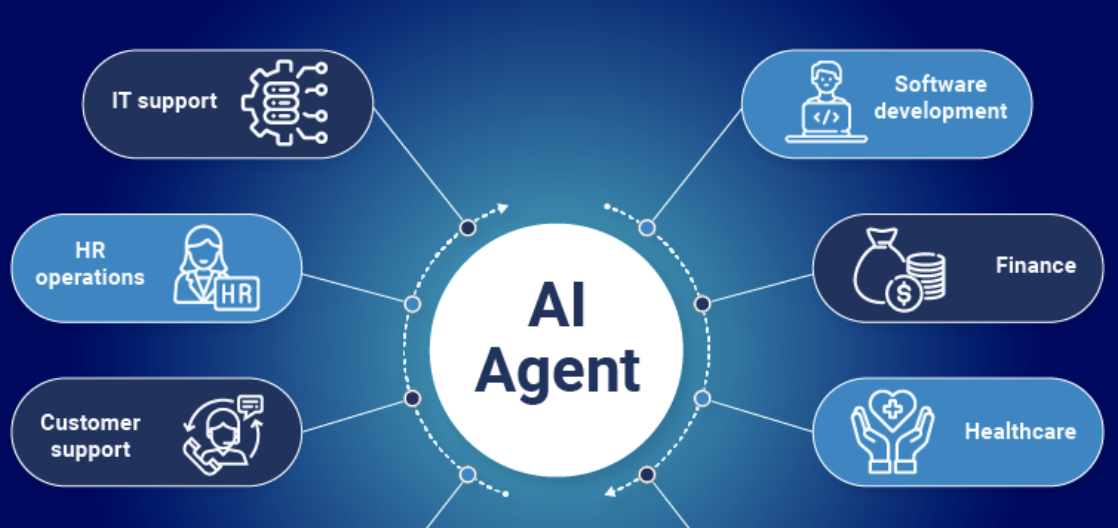
In today’s fast-paced digital world, businesses are constantly seeking innovative ways to enhance efficiency, improve decision-making, and gain a competitive edge. One groundbreaking technology revolutionizing the business landscape is Agentic AI. This article explores how Agentic AI is transforming business operations, driving growth, and reshaping industries. We will delve into its applications, benefits, challenges, and future potential.
What is Agentic AI?
Agentic AI refers to artificial intelligence systems designed to operate autonomously and make decisions independently, often acting as agents to achieve specific goals without constant human intervention. Unlike traditional AI, which typically requires human input for every step, Agentic AI can perceive its environment, plan actions, and execute tasks, adapting dynamically to changing conditions.
The Core Components of Agentic AI
- Autonomy: Agentic AI systems function independently, handling complex tasks without human oversight.
- Goal-oriented Behavior: These AI agents pursue defined objectives and optimize their actions to achieve the best outcomes.
- Interaction: They interact with humans, other AI systems, and environments to gather information and make informed decisions.
- Learning Capability: Many Agentic AI systems incorporate machine learning to improve their performance over time.
How Agentic AI Is Transforming Business Operations
1. Enhancing Decision-Making
Agentic AI systems analyze vast amounts of data in real-time, providing actionable insights and recommendations. Businesses leverage this to make faster, data-driven decisions, minimizing risks and capitalizing on new opportunities.
2. Automating Complex Tasks
From supply chain management to customer service, Agentic AI automates intricate processes that traditionally required human expertise. This automation not only reduces operational costs but also increases accuracy and consistency.
3. Personalizing Customer Experience
Agentic AI agents can interact with customers, understand their preferences, and tailor services or products accordingly. This personalization improves customer satisfaction and loyalty, driving revenue growth.
4. Optimizing Marketing Strategies
AI agents analyze consumer behavior, market trends, and competitor activities to craft optimized marketing campaigns. This leads to higher engagement rates and better return on investment (ROI).
5. Enhancing Cybersecurity
Agentic AI actively monitors network activity, detects anomalies, and responds to potential threats autonomously. This proactive defense mechanism strengthens business security posture.
Industry-Specific Applications of Agentic AI
Finance
In finance, Agentic AI assists in fraud detection, risk assessment, and algorithmic trading. Autonomous agents analyze market data and execute trades at optimal times, maximizing profits.
Healthcare
Agentic AI supports diagnostic processes, patient monitoring, and treatment recommendations. AI agents help healthcare providers deliver personalized care and improve patient outcomes.
Retail
Retailers use Agentic AI for inventory management, demand forecasting, and customer interaction through chatbots. This technology ensures stock availability and enhances shopping experiences.
Manufacturing
In manufacturing, Agentic AI optimizes production schedules, predicts equipment failures, and manages supply chains, leading to increased efficiency and reduced downtime.
Benefits of Agentic AI for Businesses
- Increased Efficiency: Automating routine and complex tasks saves time and resources.
- Improved Accuracy: AI agents reduce human errors, leading to higher quality outputs.
- Scalability: Businesses can scale operations rapidly without proportional increases in workforce.
- Cost Savings: Reduced labor costs and optimized resource allocation improve profitability.
- Competitive Advantage: Early adopters of Agentic AI gain a significant edge in market positioning.
Challenges and Considerations
While Agentic AI offers immense potential, businesses must address certain challenges:
- Ethical Concerns: Autonomous decisions may raise ethical issues, especially in sensitive areas like finance and healthcare.
- Data Privacy: Handling large volumes of data necessitates stringent privacy protections.
- Integration Complexity: Incorporating Agentic AI with existing systems can be technically challenging.
- Workforce Impact: Automation may displace some jobs, requiring workforce reskilling and adaptation.
Future Outlook of Agentic AI in Business
The future of Agentic AI in business looks promising, with advancements in natural language processing, reinforcement learning, and multi-agent systems. These developments will enable AI agents to collaborate more effectively, handle even more complex tasks, and deliver unprecedented value.
Businesses investing in Agentic AI today are positioning themselves to lead in innovation, customer satisfaction, and operational excellence tomorrow.
Conclusion
Agentic AI is a transformative force reshaping how businesses operate across industries. By enabling autonomous decision-making, task automation, and personalized customer interactions, it drives efficiency, innovation, and growth. While challenges remain, the benefits far outweigh the risks, making Agentic AI a strategic imperative for forward-thinking organizations.
Embracing Agentic AI now will empower businesses to thrive in an increasingly digital and competitive marketplace.
Keywords
Agentic AI, Autonomous AI, AI in Business, Business Automation, AI Decision Making, AI Customer Service, AI in Finance, AI in Healthcare, AI in Retail, AI in Manufacturing, Future of AI, AI Benefits, AI Challenges, Business Innovation, AI Scalability
Tags
AgenticAI #ArtificialIntelligence #BusinessTransformation #AIinBusiness #Automation #DigitalTransformation #AIApplications #BusinessGrowth #FutureTechnology #MachineLearning
